Get Help With Your Addiction
Beginning treatment can feel like a major transition, especially for women who are managing mental health symptoms, substance use, trauma, or several of these concerns at once. In Phoenix, the right residential setting can provide distance from everyday pressures while creating the stability needed to focus on healing.
Quick answer: Gender-specific residential care gives some women an environment designed around their emotional, physical, and clinical needs. When mental health concerns and substance use occur together, addressing both can be an important part of treatment. A structured, supportive residential setting can provide the safety, routine, connection, and continuity needed to begin that work before transitioning into outpatient care and everyday life.
What women and families in the Phoenix area should know
- Mental health and substance use disorders can occur together, and integrated treatment addresses both rather than treating either concern in isolation.
- Trauma can affect mental health, substance use, relationships, and a person's sense of safety, making trauma-informed treatment especially relevant for some women.
- A residential environment can provide greater structure and support during the early stages of treatment.
- For women throughout Phoenix and the surrounding Valley, continued care can help bridge the transition between residential treatment and independent daily life.
- Recovery is individual, so the appropriate level, duration, and setting of care should be based on each woman's clinical needs.
Why Can Gender-Specific Residential Care Help Some Women?
Gender-specific residential care can help some women by providing a treatment setting where their experiences, safety needs, relationships, trauma histories, and mental health concerns can be addressed within a supportive environment. It is not necessary for every woman, but it can be a meaningful option when the setting helps someone participate more comfortably and openly in treatment.
Women can arrive at treatment carrying experiences that are difficult to separate neatly into categories. Anxiety, depression, trauma, relationship difficulties, substance use, grief, and other challenges may overlap.
SAMHSA guidance on substance use treatment for women emphasizes the importance of considering trauma during assessment and treatment planning and creating environments that support women's safety and ability to engage in treatment.
For women in Phoenix, residential treatment also creates a temporary separation from the routines, relationships, triggers, and pressures associated with everyday life in a large metropolitan area. The goal is not isolation from life. It is creating enough stability to begin developing skills that can eventually be carried back into it.
How Are Trauma, Mental Health, and Substance Use Connected?
Trauma, mental health, and substance use can be interconnected, although the relationship is different for every person. SAMHSA notes that mental health and substance use disorders share some underlying risk factors, including exposure to stress or trauma, and that people may sometimes use alcohol or drugs while attempting to cope with mental health symptoms.
This is one reason treating only the substance use or only the mental health condition may leave important needs unaddressed.
At Sanctuary Recovery Centers, we take a personalized, mental-health-first approach to care. Rather than reducing a woman's experience to a single symptom or diagnosis, our focus is on understanding what she is experiencing and what she needs to move forward.
That perspective matters when trauma is part of the picture. Trauma-informed care emphasizes principles such as safety, trust, collaboration, and empowerment while seeking to avoid retraumatization.
Why Does Safety Matter During Early Treatment?
Emotional and physical safety can help create the conditions in which a woman is able to participate meaningfully in early treatment. Feeling secure in her surroundings, understanding what to expect each day, and having appropriate support can reduce some of the outside pressures competing for her attention.
Safety is more than having a secure place to stay. Emotional safety can include being treated respectfully, having appropriate boundaries, knowing that concerns can be discussed, and developing trust gradually.
This can be especially significant for women with trauma histories. Treatment should not require someone to disclose painful experiences before she is ready. A trauma-informed environment instead recognizes how past experiences may affect present needs and seeks to support recovery without unnecessarily recreating feelings of powerlessness or danger.
What Does Integrated Care Mean for Co-Occurring Disorders?
Integrated care means addressing mental health and substance use concerns together when they occur together. SAMHSA recommends integrated care for co-occurring disorders because coordinated screening and treatment can provide more complete care than approaching the conditions as unrelated problems.
Co-occurring disorders can take many forms. A woman might experience depression alongside alcohol misuse, anxiety alongside another substance use disorder, or trauma-related symptoms alongside patterns of substance use.
There is no single combination that defines a co-occurring disorder.
For women seeking care in Phoenix, the important question is therefore not simply, "Which problem came first?" A more useful treatment perspective considers how the concerns interact and what combination of support is appropriate for the individual.
How Does a Home-Like Residential Environment Support Healing?
A home-like residential environment can support healing by giving women comfortable surroundings in which treatment, rest, routine, and peer connection become part of everyday life. Clinical care remains central, but the physical and social environment can influence how manageable the treatment experience feels.
Our Blossom House provides a peaceful, home-like treatment environment for women beginning this stage of care.
For someone accustomed to instability or constant stress, ordinary routines can become meaningful. Getting up at a consistent time, sharing space respectfully, participating in scheduled activities, eating regular meals, and having time for reflection can begin restoring rhythm to the day.
In the Phoenix area, where everyday responsibilities may involve commuting across the Valley, work, family obligations, appointments, and other pressures, residential care provides an opportunity to temporarily narrow the focus to treatment and personal wellbeing.
How Do Daily Structure and Peer Connection Help?
Daily structure and peer connection can support recovery by replacing unpredictability with routine while reducing the sense that treatment has to be navigated alone. A predictable schedule can provide opportunities to practice coping skills, participate in treatment, rest, connect with others, and gradually rebuild confidence in everyday responsibilities.
Peer connection can also be valuable. Living alongside other women who are doing their own recovery work does not mean everyone has the same story. It means there can be opportunities for healthy connection, mutual understanding, accountability, and practice navigating relationships.
Comfortable surroundings support that process in another way. A treatment environment does not need to feel harsh to provide meaningful structure. Calm spaces and predictable routines can coexist with clear expectations and clinical care.
What Are Signs That Residential Care May Be Worth Exploring?
Residential care may be worth exploring when mental health or substance use concerns are significantly disrupting daily functioning or when a woman's current environment makes it difficult to stabilize and participate consistently in treatment. The appropriate level of care should always be determined through an individualized professional assessment.
Possible reasons to seek an assessment include:
- Mental health symptoms are making everyday responsibilities increasingly difficult.
- Substance use continues despite significant consequences.
- Mental health and substance use concerns appear to be reinforcing each other.
- Previous attempts to manage symptoms with less intensive support have not provided enough stability.
- Trauma-related symptoms are interfering with relationships, sleep, coping, or daily functioning.
- The current living environment makes it difficult to focus on recovery.
- A woman needs more daily structure and support than outpatient appointments alone provide.
These signs do not automatically mean residential treatment is necessary. They indicate that a professional conversation about appropriate treatment options may be worthwhile.
What Happens After the First Stage of Residential Treatment?
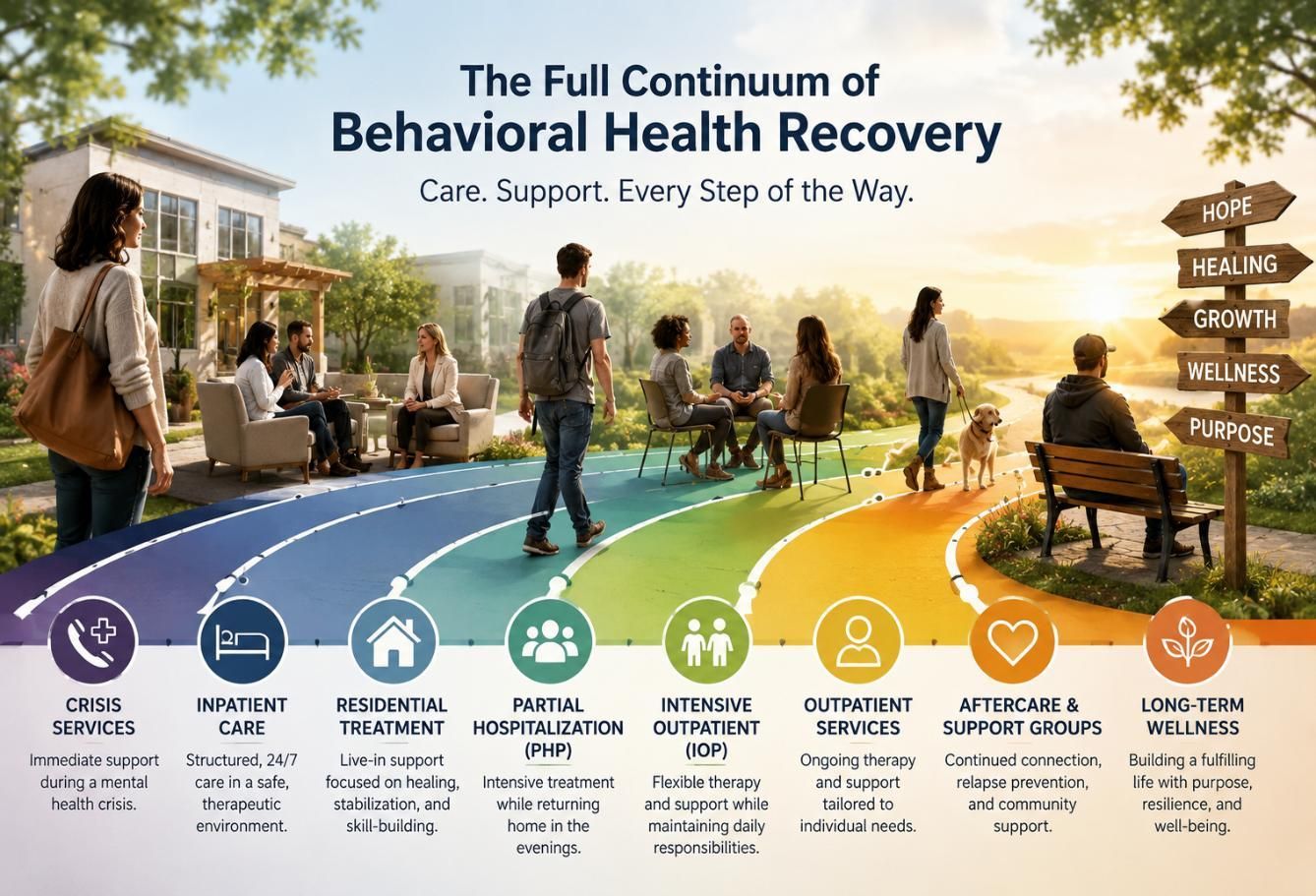
Continued care after the first stage of residential treatment helps women practice greater independence without abruptly losing the structure and support established earlier in recovery. Treatment is better understood as a progression than as a single event with a fixed finish line.
Our Rosemonte Home provides a structured next step for women receiving continued care.
This stage can help create a bridge between a highly supported environment and everyday life. As a woman progresses, the focus can increasingly include using coping skills in real situations, managing responsibilities, maintaining healthy routines, strengthening supportive relationships, and preparing for greater independence.
For women returning to life in Phoenix, Scottsdale, Tempe, Mesa, Glendale, or other Valley communities, this transition matters because recovery eventually has to function beyond a residential setting.
How Does Outpatient Care Support the Transition Back to Everyday Life?
Outpatient care can support the transition from residential treatment by maintaining therapeutic support while a woman resumes more of her regular responsibilities. Instead of moving immediately from around-the-clock structure to managing everything independently, continued treatment can provide another layer of continuity.
The right progression depends on individual clinical needs. For some women, continued residential care may be appropriate before outpatient services. Others may be ready to move into an outpatient level of support sooner.
The objective is sustainable progress rather than rushing through levels of care.
As everyday life expands again, women can continue working on mental health, recovery skills, relationships, routines, and the challenges that arise outside residential treatment.
What Are Common Mistakes When Choosing Women's Treatment?
The most common mistakes involve focusing on only one part of a woman's needs or choosing a level of care without considering the full clinical picture. Mental health, substance use, trauma, environment, safety, and available support can all influence which treatment setting is appropriate.
Mistake: Treating mental health and substance use as completely separate issues.
Consequence: Important interactions between symptoms can be overlooked.
Better approach: Seek an assessment that considers both when co-occurring disorders may be present.
Mistake: Assuming every woman needs the same recovery path.
Consequence: Care may not match her symptoms, history, strengths, or current circumstances.
Better approach: Look for individualized treatment planning.
Mistake: Thinking residential treatment is the entire recovery process.
Consequence: The transition back into everyday responsibilities may receive too little attention.
Better approach: Consider how residential, continued, and outpatient care can work together.
A Common Phoenix-Area Scenario
A common Phoenix-area scenario is a woman whose mental health symptoms and substance use have become increasingly difficult to manage while she is still trying to keep up with everyday responsibilities. She may have family obligations, work pressures, strained relationships, or a living environment that makes consistent recovery work difficult.
This is not a case study or a description of a specific client. It illustrates why the level and environment of care matter.
Residential treatment can temporarily reduce some outside demands while creating more structure around treatment. Continued care can then help her assume greater responsibility, followed by outpatient services that support the return to everyday life in Maricopa County.
How Can Sanctuary Recovery Centers Support Women Seeking Care?
Our approach supports women through personalized care that places mental health at the center while recognizing the importance of co-occurring substance use concerns, trauma, safety, daily structure, and continuity between levels of treatment.
Blossom House offers a peaceful, home-like setting for women's treatment, while Rosemonte Home provides a structured next step for women receiving continued care. Together with outpatient services, these settings can support a progression toward greater independence and everyday life.
Explore women's treatment options and speak with our team about the appropriate next step
How Do Residential, Continued, and Outpatient Care Compare?
Residential, continued, and outpatient care provide different amounts of structure and independence, and the right choice depends on a woman's clinical needs and stage of treatment. Rather than viewing one level as universally better, it is more useful to understand how each can serve a different purpose.
Residential care provides a highly structured environment where treatment and recovery can become the primary daily focus.
Continued residential care can offer a step toward greater independence while maintaining meaningful structure and support.
Outpatient care allows women to participate in treatment while spending more time managing responsibilities and practicing recovery skills in everyday settings.
A clinical assessment can help determine which level is appropriate.
Where Can Women Seek Care in the Phoenix Area?
Women in Phoenix and communities across the Valley can explore treatment based on clinical need rather than simply choosing the closest option. Our local service area may include women and families coming from communities such as Scottsdale, Tempe, Mesa, and Glendale within the greater Maricopa County region.
A local continuum of care can also make the eventual transition into everyday routines and ongoing services more practical.
What Can Happen When Needed Treatment Is Delayed?
Delaying needed treatment can allow mental health symptoms, substance use, relationship problems, and disruptions to everyday functioning to continue or become more difficult to manage. The specific consequences vary, so seeking an assessment can help clarify whether residential, outpatient, or another level of care is appropriate now.
SAMHSA notes that co-occurring disorders can complicate diagnosis and treatment, which is one reason screening for both mental health and substance use concerns is valuable.
Seeking information does not commit someone to residential treatment. It can simply be the first step toward understanding available options.
Talk with our team about treatment options
FAQ About Women's Mental Health and Co-Occurring Disorder Care in Phoenix
What is a co-occurring disorder?
A co-occurring disorder means a person has both a mental health disorder and a substance use disorder. The specific combination varies from person to person. Because the two concerns can interact, SAMHSA recommends integrated approaches that address mental health and substance use rather than treating them as entirely separate issues.
Is residential treatment in Phoenix only for substance use disorders?
Residential behavioral health treatment is not necessarily limited to substance use concerns. Arizona recognizes behavioral health residential facilities as settings that provide treatment for people experiencing behavioral health issues. The appropriate program and level of care depend on an individual's symptoms, diagnoses, safety considerations, and treatment needs.
Why might a woman choose gender-specific treatment?
A woman might choose gender-specific treatment because she feels more comfortable addressing trauma, relationships, mental health, substance use, or other sensitive experiences in a women's environment. Gender-specific care is not required for every woman, but the treatment setting can influence a person's sense of safety and willingness to participate.
Why is trauma-informed care important for women in treatment?
Trauma-informed care is important because past trauma can affect emotional responses, relationships, coping, and engagement with treatment. SAMHSA describes trauma-informed approaches as emphasizing safety, trust, collaboration, and empowerment while actively seeking to avoid retraumatization. Treatment should consider trauma without forcing disclosure before someone is ready.
Can Phoenix women receive mental health and substance use treatment at the same time?
Yes, mental health and substance use concerns can be addressed together when someone has co-occurring disorders. SAMHSA recommends integrated care because coordinated treatment can better address the whole person's needs. The exact services and treatment plan should be determined through an individualized clinical assessment.
What is the purpose of a home-like treatment setting?
A home-like treatment setting can combine everyday comfort with the structure needed for residential care. For some women, predictable routines, supportive peer relationships, comfortable surroundings, and space away from outside pressures can make it easier to focus on treatment and begin practicing skills that will later be used independently.
What happens when residential treatment ends in Phoenix?
What happens after residential treatment depends on the woman's individual needs and progress. Continued residential care may provide an intermediate step, while outpatient services can maintain clinical support as she returns to more everyday responsibilities. Planning this transition can help preserve continuity instead of treating discharge as the end of recovery.
How do I know which level of care is appropriate?
A professional assessment is the best way to determine the appropriate level of care. Factors can include mental health symptoms, substance use, safety, functioning, previous treatment, living environment, support system, and ability to participate successfully in outpatient care. Needing help does not automatically mean residential treatment is required.
Begin Healing in a Setting Built for the Next Step
Finding care is not about fitting every woman into the same recovery path. Our Phoenix-area approach focuses on personalized treatment, supportive surroundings, and thoughtful transitions between levels of care so women can work toward greater stability and independence.