Get Help With Your Addiction
For people and families in Phoenix, recovery can become more complicated when substance use is accompanied by depression, anxiety, trauma symptoms, or another mental health concern. Treating only one side of the problem may leave important needs unaddressed and make it harder to understand what is driving symptoms, setbacks, or continued substance use.
The most effective approach is often to evaluate mental health and substance use together. When both conditions are present, they are commonly called co-occurring disorders. Integrated care considers how each condition affects the other and helps create a more coordinated treatment plan rather than treating them as unrelated problems.
What local readers should know
- Mental health conditions and substance use disorders can occur at the same time and influence one another.
- SAMHSA recommends screening people seeking mental health care for substance use concerns and screening people seeking substance use treatment for mental health concerns.
- Residents throughout Phoenix and Maricopa County may encounter several levels of behavioral health support, so asking how providers coordinate care can help families compare options.
- Depression, anxiety, trauma-related symptoms, mood changes, and substance use may overlap in ways that require professional assessment.
- Recovery planning should be individualized because the combination of symptoms, substances, medical needs, family circumstances, and support systems differs from person to person.
Why Should Mental Health and Substance Use Disorders Be Treated Together?
Mental health and substance use disorders should be treated together because each condition can affect the symptoms, course, and recovery process of the other. Looking at the whole person gives clinicians more information for assessment and helps reduce the risk that one significant concern will be overlooked while attention is focused on the other.
SAMHSA refers to the presence of both a mental health disorder and a substance use disorder as co-occurring disorders. These conditions can appear in many combinations. Someone might struggle with alcohol use and depression, stimulant use and anxiety, opioid use and trauma-related symptoms, or another combination entirely.
For families in Phoenix, the practical point is simple: treatment does not need to force a person into an either-or category.
At Sanctuary Recovery Centers, we encourage people considering treatment to ask how mental health symptoms and substance use are evaluated together. A coordinated assessment can provide a clearer starting point for determining what type of care may be appropriate.
What Does Integrated Treatment Mean?
Integrated treatment means addressing mental health and substance use needs in a coordinated way rather than treating each condition as if it exists independently. SAMHSA describes integrated care as an approach that connects mental health and substance use interventions while considering the individual's physical, emotional, and recovery needs.
Integration can take different forms. Some organizations coordinate with outside mental health or medical providers. Others may offer multiple services in one setting. The important issue is whether the professionals involved communicate appropriately and understand the full clinical picture.
For someone traveling from Tempe, Glendale, Scottsdale, or another part of the Valley for care, asking about coordination is especially useful when several providers are involved.
Questions may include:
- How are mental health symptoms assessed?
- How does the treatment team identify possible co-occurring disorders?
- How are medications reviewed alongside substance use history?
- How do different providers communicate about the treatment plan?
- What happens if new mental health symptoms become apparent during recovery?
Why Does This Matter in Phoenix and Maricopa County?
Addressing both conditions matters locally because behavioral health and substance use are significant community health concerns across Maricopa County. County public health resources address mental health, substance use, overdose prevention, suicide prevention, fentanyl, and crisis support as connected parts of the region's behavioral health landscape.
Phoenix is also a large metropolitan area where people may receive care from multiple systems. A person could have a primary care provider near Arcadia, a therapist elsewhere in the Valley, medication management through another organization, and substance use treatment in a different location.
Without coordination, important information can become fragmented.
That does not mean every person needs every type of service. It means treatment planning should start with a complete picture of the individual rather than assuming that substance use or mental health symptoms exist in isolation.
What Are Common Signs That Both Issues May Need Attention?
Signs that both issues may need attention include persistent emotional or behavioral symptoms alongside problematic alcohol or drug use. A professional assessment is necessary to determine what is actually occurring because intoxication, withdrawal, stress, medical conditions, and mental health disorders can sometimes produce overlapping symptoms.
Possible warning signs include:
- Substance use increases during periods of anxiety, sadness, anger, or emotional distress.
- A person repeatedly uses alcohol or drugs in an attempt to sleep, relax, feel confident, or avoid difficult memories.
- Depression, panic, severe mood changes, or other symptoms continue during periods of reduced substance use.
- Attempts to stop using are followed by intense emotional distress that interferes with recovery.
- Substance use contributes to problems at work, school, home, or in important relationships.
- Mental health symptoms become harder to manage as substance use increases.
- Previous treatment addressed one concern, but significant symptoms related to the other remained.
These signs do not establish a diagnosis. They indicate that a more complete professional evaluation may be appropriate.
When Should Someone Seek Professional Help?
Professional help should be considered when substance use or mental health symptoms interfere with daily functioning, safety, relationships, work, school, or the ability to stop using substances despite negative consequences. People should also seek assessment when symptoms repeatedly return or when previous efforts have not addressed the full pattern.
Residents in Downtown Phoenix, Maryvale, South Mountain, and surrounding communities have different circumstances and support systems, but the threshold for seeking help should not depend on reaching a particular "rock bottom."
Earlier assessment can help clarify what is happening and what options may be available.
If someone is experiencing a life-threatening emergency, call 911. People experiencing a mental health or suicide-related crisis can also call or text 988 for crisis support.
What Can Contribute to Co-Occurring Mental Health and Substance Use Disorders?
Co-occurring disorders can develop through several pathways, and there is usually no single explanation that applies to everyone. SAMHSA notes that mental health concerns and substance use may share underlying factors, while substances can also worsen certain psychiatric symptoms and some people may use substances in an attempt to cope with distress.
Common patterns can include:
Using substances to cope with symptoms. Someone experiencing anxiety, insomnia, painful memories, or low mood may begin relying on alcohol or drugs for short-term relief.
Substances affecting mental health. Alcohol and other drugs can influence sleep, mood, thinking, motivation, and behavior.
Shared risk factors. Stress, trauma, genetics, environment, and other personal factors may contribute to both types of disorders.
A cycle of worsening symptoms. Emotional distress may contribute to substance use, while the consequences of substance use may create more distress.
Professional assessment helps separate assumptions from the person's actual clinical needs.
How Can Families Support a Whole-Person Approach?
Families can support a whole-person approach by focusing on patterns, encouraging professional assessment, and sharing relevant information when the individual has consented to family involvement. The goal is not to diagnose the person at home but to help treatment professionals understand changes in behavior, functioning, substance use, and emotional health.
Families in the Phoenix area can also prepare useful questions before contacting a treatment provider.
Ask how the program evaluates co-occurring conditions, how care is coordinated, what happens when symptoms change, and how continuing care is planned after a more intensive phase of treatment ends.
Avoid reducing every difficult behavior to either "the addiction" or "the mental health issue." In reality, the relationship may be more complicated.
What Results Can Someone Expect From Integrated Care?
Integrated care can provide a more coordinated understanding of a person's needs and allow treatment decisions to account for both mental health and substance use concerns. SAMHSA reports that integrated approaches can improve quality of care and are associated with better outcomes for people living with co-occurring disorders.
Recovery still varies from person to person. Treatment is not an instant solution, and progress may include changes in substance use, emotional stability, daily functioning, relationships, coping skills, or engagement with continuing care.
A realistic treatment plan should also change as new information becomes available.
What Are Common Mistakes When Choosing Treatment?
The most common mistakes involve treating one problem while ignoring another, assuming symptoms have a single cause, or choosing care without asking how providers communicate. A better approach is to look for assessment and treatment planning that considers substance use, mental health, medical factors, medications, safety, and ongoing support together.
Mistake: Assuming all emotional symptoms will disappear after substance use stops.
Consequence: A separate mental health concern may remain unidentified.
Better approach: Ask whether mental health symptoms are monitored throughout recovery.
Mistake: Treating substance use only as a symptom of mental health problems.
Consequence: The substance use disorder itself may not receive adequate attention.
Better approach: Evaluate both concerns on their own terms and consider how they interact.
Mistake: Keeping providers disconnected.
Consequence: Important treatment information may not be shared.
Better approach: Ask how care is coordinated when multiple providers are involved.
What Is a Common Local Scenario?
A common local scenario is a Phoenix resident entering treatment because alcohol or drug use has begun affecting work, relationships, or daily life while also experiencing persistent anxiety or depression. The initial concern may appear to be substance use, but a fuller assessment can reveal mental health symptoms that also deserve attention.
The reverse can happen as well. Someone seeking help for anxiety or depression may disclose that alcohol or drugs have become a significant coping strategy.
Neither situation means one condition automatically caused the other. It means both deserve careful evaluation.
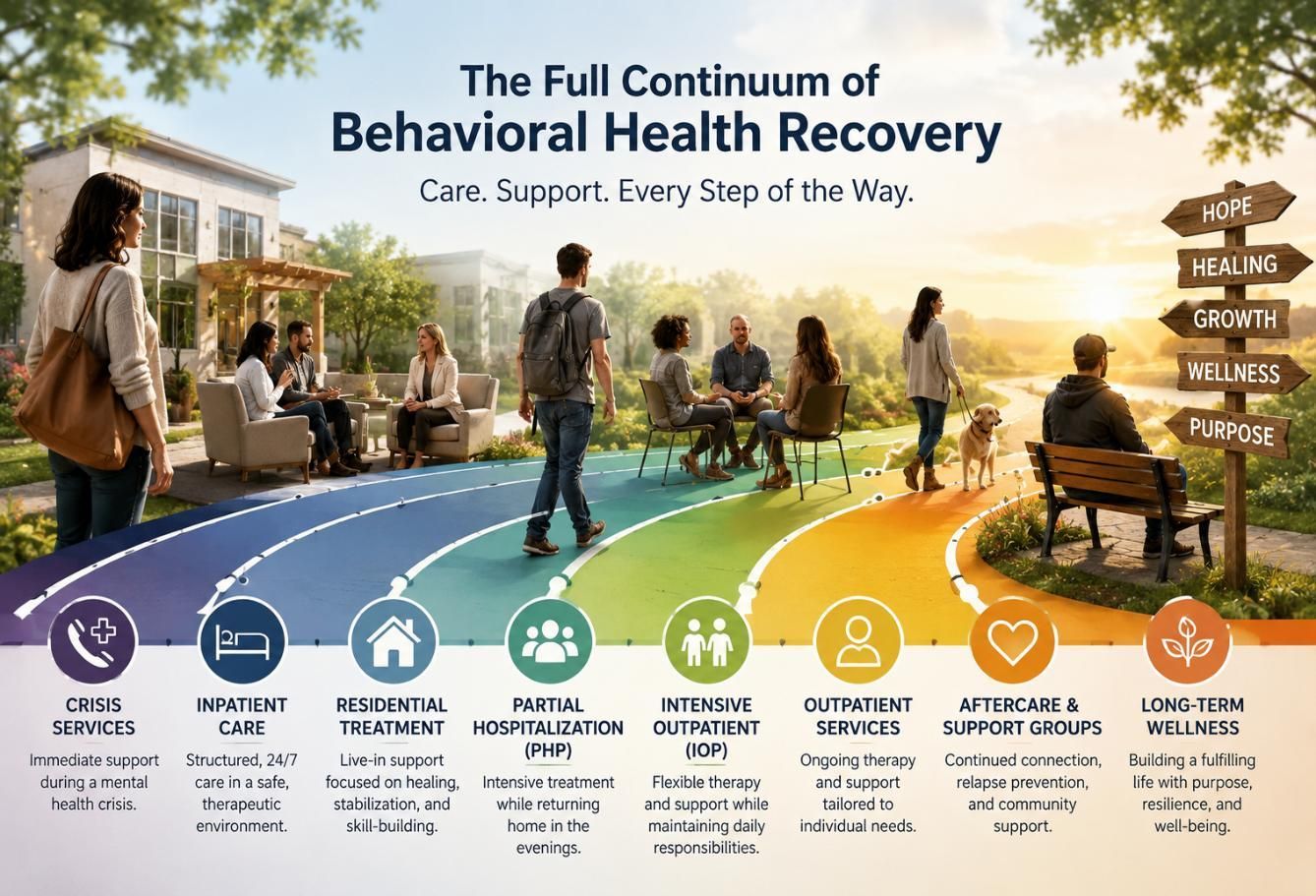
What Treatment Options May Be Part of Whole-Person Care?
Whole-person care may involve several services depending on the person's diagnosis, substance use pattern, medical condition, safety needs, and recommended level of care. Treatment should be individualized rather than based on a standard formula for everyone with co-occurring concerns.
Possible components can include professional assessment, individual therapy, group therapy, psychiatric or medical evaluation, medication when clinically appropriate, substance use counseling, relapse prevention planning, peer or recovery support, and continuing care.
Ready to explore treatment options?
How Do You Compare Separate and Integrated Approaches?
Integrated care differs from separate treatment primarily in how information, goals, and interventions are coordinated. Separate providers can still deliver effective care when communication is strong, while an integrated setting may make coordination easier. The right arrangement depends on the individual's needs and available treatment resources.
Which Areas Can Local Readers Consider When Seeking Care?
Local readers seeking behavioral health care can consider options throughout Phoenix and the surrounding Valley based on clinical needs, accessibility, insurance, level of care, and continuity of support. Nearby communities such as Mesa, Tempe, Scottsdale, and Glendale are also part of the broader Maricopa County treatment landscape.
Location can matter, but appropriate clinical care and continuity should remain central to the decision.
What Can Happen When One Condition Goes Unaddressed?
When one condition goes unaddressed, unresolved symptoms may continue to interfere with recovery, functioning, relationships, and treatment participation. The specific consequences vary, but separating closely connected behavioral health concerns can make it harder for both the individual and treatment team to understand the full pattern.
Waiting can also allow substance-related, emotional, occupational, relationship, or safety problems to become more difficult to manage.
Contact us to learn about available recovery options
Frequently Asked Questions About Co-Occurring Disorders in Phoenix
Are co-occurring disorders common among people seeking treatment in Phoenix?
Co-occurring disorders are common nationally, and Phoenix residents seeking behavioral health care may also experience both mental health and substance use concerns. SAMHSA reported that approximately 21.2 million U.S. adults had both a mental illness and substance use disorder in 2024, demonstrating why screening for both is important.
What does dual diagnosis mean?
Dual diagnosis generally refers to having both a mental health disorder and a substance use disorder. The term co-occurring disorders is also widely used. The specific combination varies from person to person, so treatment planning should be based on an individualized professional assessment rather than the label alone.
Can anxiety and substance use be treated at the same time?
Yes, anxiety and substance use can be addressed within a coordinated treatment plan when clinically appropriate. The exact approach depends on the person's symptoms, diagnosis, substances involved, medications, medical history, and treatment needs. People in Maricopa County should ask providers how mental health and substance use services are coordinated.
Can depression contribute to alcohol or drug use?
Depression can occur alongside problematic alcohol or drug use, and some people report using substances in an attempt to cope with difficult emotions. However, the relationship is not identical for everyone. Professional evaluation can help determine whether depression, substance use, or both require specific treatment.
Where can someone in Phoenix get help during a mental health crisis?
People in Phoenix experiencing a mental health or suicide-related crisis can call or text 988 for crisis support. Maricopa County Public Health also lists local behavioral health crisis resources. If there is an immediate life-threatening emergency or danger requiring emergency response, call 911.
Does everyone with a substance use disorder also have a mental health disorder?
No. Having a substance use disorder does not automatically mean someone also has a separate mental health disorder. Because the conditions commonly overlap, SAMHSA recommends appropriate screening. Assessment helps clinicians distinguish temporary substance-related symptoms from mental health concerns that may require their own treatment.
What should families in Maricopa County ask a treatment center?
Families in Maricopa County should ask how the center screens for mental health and substance use disorders, which services are available, how medications are managed, how different clinicians coordinate, what level of care is offered, and how continuing care is planned. Answers should reflect the individual's clinical needs.
Can treatment for co-occurring disorders include medication?
Yes, medication can be part of treatment when clinically appropriate and prescribed by a qualified professional. Whether medication is recommended depends on the individual's diagnosis, health history, substance use, current medications, and other factors. Medication decisions should be integrated into the broader treatment plan rather than considered in isolation.
Support Recovery by Addressing the Whole Person
Mental health and substance use can become deeply intertwined, which is why careful assessment and coordinated care matter for individuals and families throughout Phoenix and the surrounding Valley. Understanding the whole picture gives people a stronger foundation for making informed treatment decisions.
Take the Next Step Toward Coordinated Recovery Support
Finding care that considers the whole person can help create a clearer path forward. Contact us to discuss available treatment options and learn what the next step may look like.