Get Help With Your Addiction
For Phoenix families considering residential treatment for a teenager, one of the most important things to understand is that adolescent care cannot simply copy an adult treatment model. Teens are still developing emotionally, socially, physically, and neurologically, while also navigating school, family relationships, friendships, identity, and growing independence.
Residential treatment for adolescents should account for those developmental realities while providing the structure and support a young person needs away from everyday pressures and triggers.
Quick answer: Teen residential treatment differs from adult care because adolescents are still developing the skills adults often use to understand consequences, regulate emotions, make decisions, communicate needs, and manage relationships. Effective adolescent treatment must consider family involvement, education, peer dynamics, developmental stage, safety, substance use, mental health symptoms, and the eventual transition back into home and school life.
What Phoenix families should know
- Teenagers need developmentally appropriate treatment rather than adult treatment delivered to younger patients.
- Family relationships often play an especially important role in a teen's treatment and return home.
- School responsibilities remain relevant for adolescents, including students from Phoenix, Glendale, Scottsdale, Tempe, and other Maricopa County communities.
- Peer relationships can support recovery, but unhealthy peer pressure can also complicate treatment.
- A teen's needs may change quickly as clinicians learn more about mental health symptoms, substance use, family dynamics, and daily functioning.
Why Is Residential Treatment Different for Teenagers?
Residential treatment is different for teenagers because adolescence is a distinct developmental period, not simply an earlier version of adulthood. The CDC describes adolescence as a formative stage involving significant physical, emotional, and social changes. Treatment therefore has to address both the condition bringing a teen into care and the developmental tasks that are happening at the same time.
An adult entering treatment may have years of independent living, work experience, long-term relationships, and established coping habits. A 15-year-old from North Phoenix or Ahwatukee may still rely heavily on parents, attend school every weekday, have limited control over their environment, and be learning how to handle intense emotions or social conflict.
That difference affects nearly every part of residential care, including communication, expectations, family participation, boundaries, education, and planning for life after treatment.
Sanctuary Recovery Centers serves families in the Phoenix, AZ area who may be trying to understand these differences. From this point forward, our focus is on helping families recognize what makes adolescent treatment unique and what questions deserve attention when evaluating care.
How Does Adolescent Development Affect Treatment?
Adolescent development affects treatment because a teen's brain, identity, emotional regulation, judgment, and social skills are still changing. According to the CDC, young people between roughly ages 11 and 17 undergo substantial physical and emotional development, which can influence how they respond to stress, relationships, rules, consequences, and treatment itself.
A teenager may understand intellectually that a behavior is harmful while still struggling to apply that knowledge during an emotionally charged moment. A young person may also be deeply influenced by friends, social media, romantic relationships, school pressures, or fear of being excluded.
For local families, these pressures do not disappear when treatment begins. A teen from Maryvale may worry about returning to the same friend group. A student from Scottsdale may feel overwhelmed about missed coursework. Someone from the Deer Valley area may be anxious about how classmates will respond after an extended absence.
Adolescent care has to prepare young people for those real situations rather than treating symptoms in isolation.
Why Is Family Involvement So Important?
Family involvement is important in teen residential treatment because most adolescents eventually return to a household where family communication, boundaries, supervision, and relationships can influence continued progress. Treatment that focuses only on the teen may miss important parts of the environment the young person will reenter after residential care.
Parents and caregivers may need to learn new ways to communicate, respond to conflict, recognize warning signs, establish appropriate boundaries, and support healthy routines.
That does not mean blaming families for a teenager's struggles. It means recognizing that adolescents generally remain connected to caregivers in ways that differ substantially from independent adults.
For households throughout Maricopa County, treatment planning may also need to consider transportation, siblings, school schedules, work obligations, custody arrangements, and other practical realities of returning home.
What Role Do School and Peer Relationships Play?
School and peer relationships play a major role because education and social belonging are central parts of adolescent life. Teen treatment should consider how a young person will manage academic responsibilities, friendships, social pressure, extracurricular activities, and the transition back into a school environment after residential care.
The CDC identifies family and school connectedness as important protective influences for young people's mental health.
For a Phoenix-area teenager, returning home may also mean returning to a campus, sports team, neighborhood friend group, or social environment associated with earlier problems. Those situations can require specific planning.
Treatment discussions may include questions such as:
- How will the teen respond when an old friend offers substances?
- What happens if returning to school causes anxiety?
- How should parents handle access to phones, transportation, money, or social activities?
- What support will be available after residential treatment?
- How can the family encourage healthy independence without removing necessary structure?
These are adolescent questions, not simply smaller versions of adult recovery concerns.
What Warning Signs May Suggest a Teen Needs More Support?
Warning signs that a teenager may need additional behavioral health support include significant changes in functioning, safety, substance use, relationships, school performance, mood, or behavior. No single sign automatically means residential treatment is necessary, but several persistent or escalating concerns deserve professional evaluation.
Families may notice:
- Increasing or repeated substance use
- Severe withdrawal from family or healthy friends
- Major changes in school attendance or performance
- Repeated unsafe or highly impulsive behavior
- Intense mood or behavioral changes that interfere with daily life
- Difficulty functioning despite outpatient support
- Repeated crises or an inability to maintain safety
- Mental health and substance use concerns occurring together
Parents should not try to determine the appropriate level of care from a checklist alone. A qualified behavioral health professional can assess the teen's needs and discuss whether outpatient, intensive outpatient, inpatient, residential, or another form of care is appropriate.
If a young person is experiencing an immediate mental health or safety crisis, families can call or text 988 for crisis support.
What Common Challenges Can Complicate Teen Residential Treatment?
Common challenges in teen residential treatment include resistance to treatment, strong peer influence, family conflict, academic concerns, co-occurring mental health symptoms, and fear about returning home. Because teenagers are still developing independence, they may also experience treatment rules and structure differently from adults who chose care entirely on their own.
One teen may insist that substance use is not a serious problem. Another may participate well in treatment but worry about losing friendships at home. Another may struggle with depression, anxiety, trauma-related symptoms, or another behavioral health concern alongside substance use.
Phoenix families also face practical transition questions. A teen may be returning to a busy household in Arcadia, a school in Tempe, a neighborhood in Glendale, or another environment that differs significantly from the structured residential setting.
Identifying those challenges before discharge can make transition planning more realistic.
What Should Parents Look for When Comparing Treatment Options?
Parents comparing teen treatment options should look for developmentally appropriate care, qualified clinical oversight, family involvement, education planning, safety procedures, individualized assessment, and a clear plan for what happens after residential treatment. The right level and setting of care should reflect the individual teenager rather than a one-size-fits-all program model.
Useful questions include:
- Does the program specifically treat adolescents?
- How are mental health and substance use concerns assessed?
- How are parents or caregivers involved?
- How does the program address school responsibilities?
- What happens if the teen experiences a behavioral or psychiatric crisis?
- How are medications handled when applicable?
- How is progress evaluated?
- What does discharge and continuing-care planning involve?
Families should also ask how recommendations are personalized to the young person's age, history, current symptoms, home environment, and goals.
What Can Families Expect From Residential Treatment?
Families can generally expect residential treatment to provide a structured living environment with behavioral health services delivered over an extended period rather than during brief office visits. SAMHSA distinguishes residential treatment from outpatient care because the individual lives at the treatment setting, typically for at least several weeks.
The exact experience varies according to the program and the teenager's needs. Treatment may involve assessment, individual or group services, family participation, daily routines, skills development, education-related planning, medication management when clinically appropriate, and preparation for the next level of care.
Progress is rarely a straight line. Families may see improvement in one area while another remains difficult.
The goal should not be to promise that residential care will permanently eliminate every challenge. A more realistic goal is to help a teenager develop stronger skills, improve functioning, address underlying concerns, and leave treatment with an appropriate continuing-care plan.
What Mistakes Should Families Avoid?
Families should avoid treating residential care as a punishment, expecting immediate change, ignoring the home environment, or assuming treatment ends when the teen returns home. These approaches can create unrealistic expectations and overlook the ongoing support many adolescents need while applying new skills in everyday life.
Mistake: Presenting treatment as punishment.
Consequence: A teen may associate getting help with shame or discipline.
Better approach: Explain that treatment is intended to address health, safety, behavior, and functioning.
Mistake: Focusing only on the teenager.
Consequence: Family patterns or environmental stressors may remain unchanged.
Better approach: Participate appropriately in family-related treatment and transition planning.
Mistake: Expecting residential structure to transfer automatically home.
Consequence: New skills may become harder to use once school, friends, devices, transportation, and everyday stress return.
Better approach: Create clear home routines and follow-up plans before discharge.
Mistake: Waiting for a major crisis before asking questions.
Consequence: Families may have fewer opportunities to evaluate options calmly.
Better approach: Seek a professional assessment when concerning changes become persistent or severe.
What Is a Common Phoenix-Area Scenario?
A common Phoenix-area scenario involves a teenager whose difficulties affect several parts of life at once, including school, friendships, family relationships, emotional health, and substance use. This example is illustrative rather than a specific Sanctuary Recovery Centers case study.
Imagine a high school student whose substance use has increased while attendance drops and arguments at home become more frequent. Parents try stricter rules, but the teen becomes increasingly secretive. Outpatient support has been attempted, yet daily functioning continues to deteriorate.
The key question is not simply, "How do we stop the substance use?"
A thorough assessment may also need to ask what the teen is experiencing emotionally, how peer relationships influence behavior, what is happening at school, whether other mental health concerns are present, how safe the current environment is, and what level of care is appropriate.
That broader view is one reason adolescent treatment requires its own approach.
How Do Residential and Outpatient Treatment Compare?
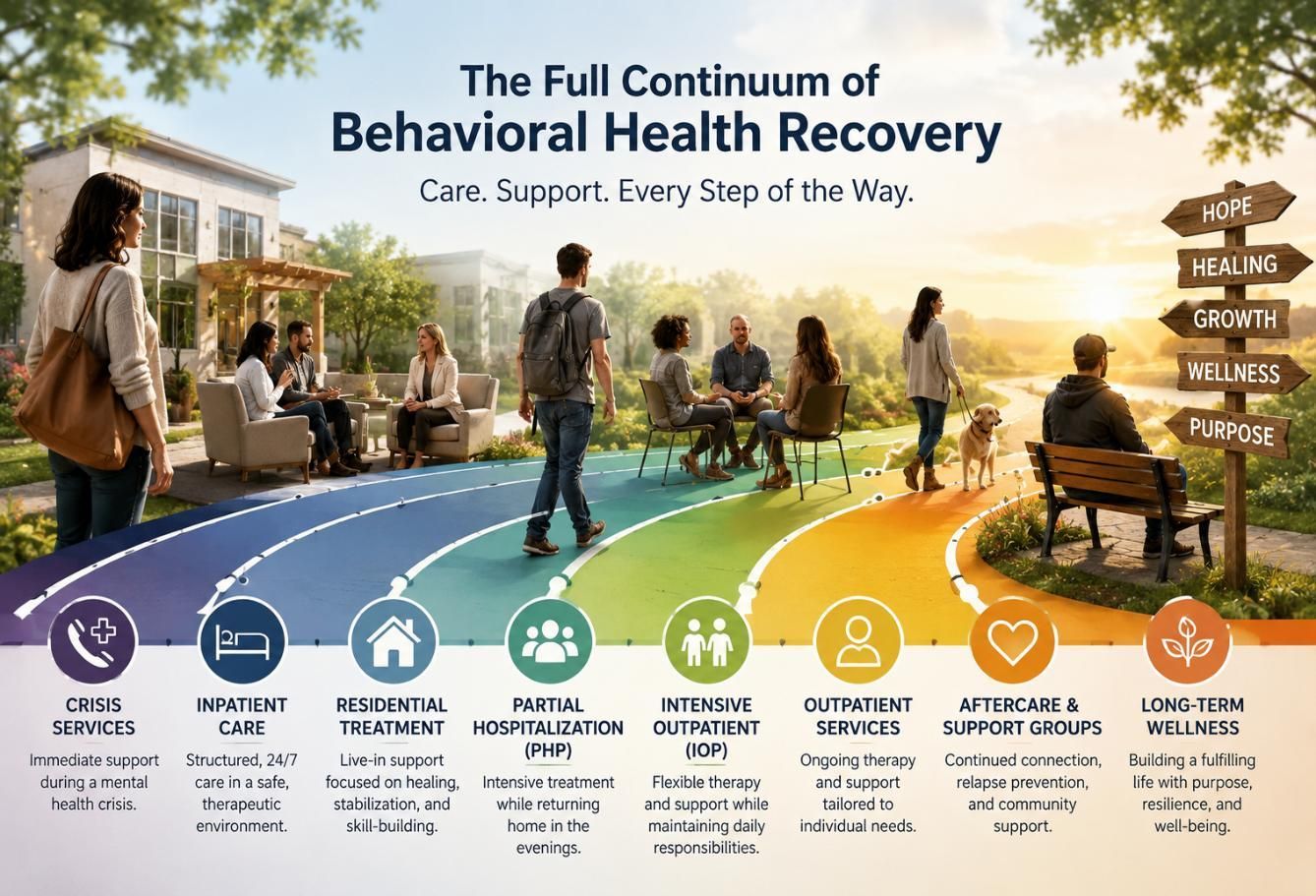
Residential treatment provides a more structured living environment, while outpatient treatment allows a teenager to remain at home and attend scheduled services. Neither option is automatically better. The appropriate choice depends on clinical needs, safety, functioning, treatment history, family circumstances, and recommendations from qualified professionals.
Outpatient care may be appropriate when a teen can remain safe and function adequately at home while participating in treatment.
Residential care may be considered when a young person needs more structure and support than can reasonably be provided through scheduled outpatient appointments.
Hospital inpatient care serves a different purpose and may be needed for acute stabilization in certain circumstances.
Families should focus on matching the level of care to the teen rather than selecting the most intensive or least intensive option by default.
What Happens If Serious Problems Are Left Unaddressed?
Leaving serious adolescent behavioral health or substance use problems unaddressed can allow difficulties to affect school, relationships, physical health, safety, and future functioning. CDC and SAMHSA guidance emphasizes that adolescence is a formative period in which behavioral patterns and health concerns can have effects that continue into adulthood.
Early attention does not mean every struggling teenager needs residential care.
It means parents should take significant changes seriously, seek an appropriate assessment, and understand the available levels of support before problems escalate further.
For families in Phoenix and surrounding Maricopa County communities, getting clear professional guidance can be the first step toward deciding what type of help makes sense.
Contact us to discuss adolescent treatment options and next steps
Where Do We Serve Local Families?
We serve Phoenix-area families seeking information and support related to adolescent treatment and recovery options. Our local community includes families across Phoenix as well as nearby communities such as Scottsdale, Tempe, Glendale, and other parts of Maricopa County.
Families can contact us to ask about available services, suitability, and next steps.
Reach out today to discuss concerns before they become harder to manage
Frequently Asked Questions About Teen Residential Treatment
Is residential treatment appropriate for every struggling teenager in Phoenix?
No. Residential treatment is not appropriate for every struggling teenager in Phoenix. The appropriate level of care depends on the young person's symptoms, functioning, safety, substance use, home environment, previous treatment, and other clinical factors. A qualified professional assessment should guide whether outpatient, residential, inpatient, or another form of care is most appropriate.
Why can't teenagers simply attend the same residential programs as adults?
Teenagers have different developmental, educational, family, and social needs from adults. Their brains and bodies are still developing, and most remain dependent on caregivers and connected to school. Adolescent treatment should account for those differences rather than expecting a younger patient to function within an adult-oriented treatment model.
How involved should parents be in teen residential treatment?
Parent involvement can be an important part of adolescent treatment because most teens eventually return to a family environment. The exact level of participation depends on the program and clinical circumstances, but families may be involved in communication, education, family sessions, discharge preparation, and planning for appropriate structure and support at home.
What happens with school while a Phoenix teen is in residential treatment?
School planning depends on the individual program, length of stay, teenager's needs, and educational situation. Because adolescents have ongoing academic responsibilities, parents should ask prospective programs exactly how education is handled and how the teen's eventual return to a Phoenix-area school will be coordinated.
Can teen residential treatment address both substance use and mental health concerns?
Some adolescent treatment settings are designed to address substance use alongside co-occurring mental health needs, but services vary by provider. SAMHSA recognizes that young people can experience substance use and mental health concerns together. Families should specifically ask how assessment, treatment planning, clinical staffing, and referrals address both areas.
How long does adolescent residential treatment last?
There is no single appropriate length of residential treatment for every teenager. SAMHSA describes residential treatment as care in which a person lives at a treatment program, generally for at least several weeks. Actual duration depends on the setting, clinical needs, progress, treatment plan, insurance considerations, and recommended next level of care.
What should Maricopa County parents ask before choosing a program?
Maricopa County parents should ask whether the program specializes in adolescents, how staff assess behavioral health needs, how families participate, how school is addressed, what safety procedures are used, how progress is measured, and what aftercare planning looks like. Families should also verify licensing and other relevant program information directly.
What should I do if my teenager is in an immediate mental health crisis?
If your teenager is in an immediate mental health or safety crisis, seek crisis assistance rather than relying on routine treatment inquiries. The 988 Suicide & Crisis Lifeline is available by calling or texting 988. Emergencies involving immediate danger may require emergency medical services or another appropriate local emergency response.
Give Your Teen Care That Recognizes Their Stage of Life
Teenagers need treatment that recognizes adolescent development, family relationships, education, peer influence, and the challenges of returning to everyday life. For Phoenix-area families, understanding these differences can make it easier to ask better questions and evaluate the appropriate level of care.